
Our Efforts with a View to the Future
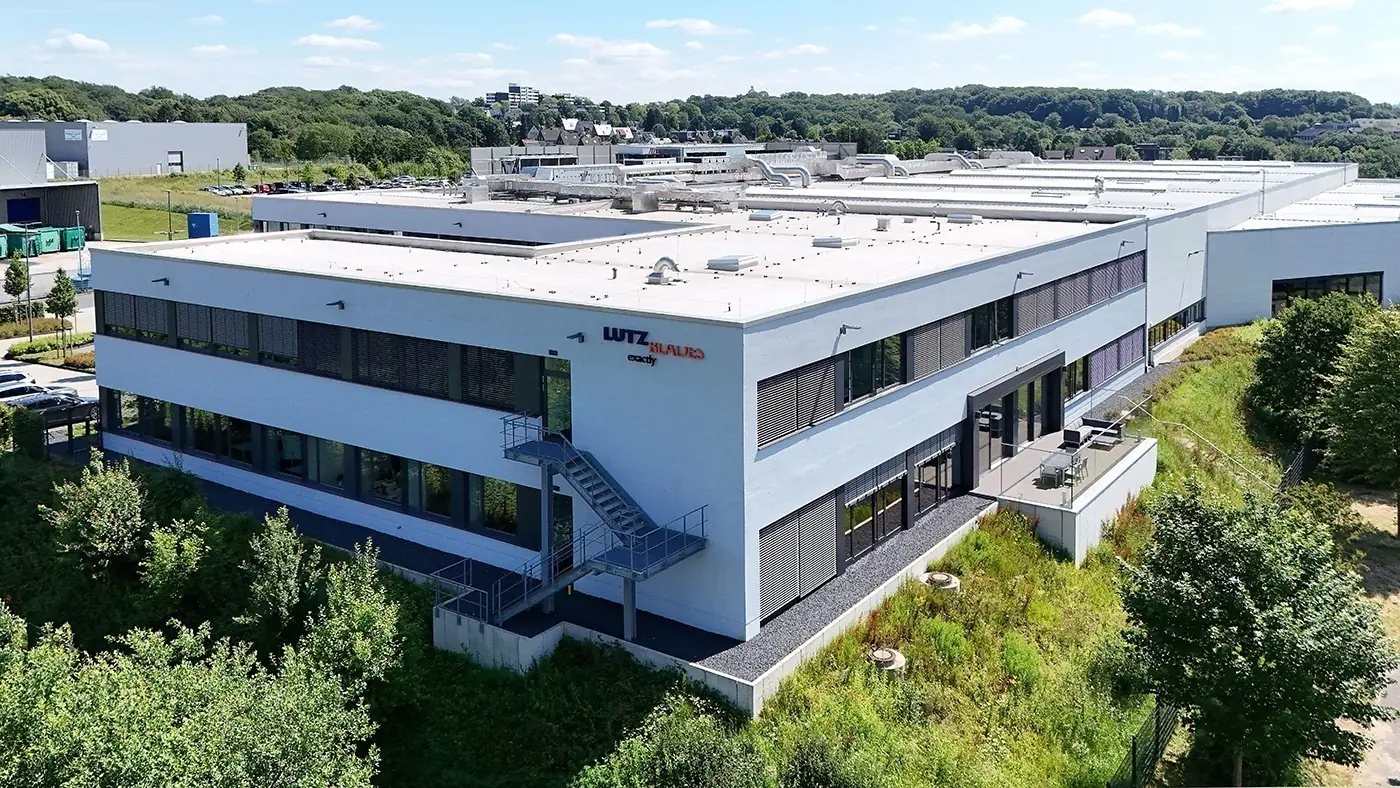
Our approach is based on long-term thinking and clearly defined milestones, not on short-term measures
We take responsibility by designing our production and value chain to use resources efficiently and avoid waste. Our goal is to reduce the impact of our products and their manufacturing in the long term. To achieve this, we continuously analyze and optimize our processes, implement targeted measures, and evolve—wherever it is technically feasible and economically viable. Where possible, we use natural or recyclable raw materials to close the resource loop and increase material efficiency.
Our Strategy
The foundation for our efforts and goals to increase our resource efficiency is ISO 14001. We implemented the standard in our company in 2024 and continuously develop the management system through ongoing dialogue and regular internal audits. The management system encompasses all interested parties, including customers, suppliers, employees, and all LUTZ locations. The scope of application covers the development, design, manufacturing, and distribution of cutting systems, blades, and knives.
In addition to ISO 14001, Lutz has maintained ISO 50001 Energy Management Systems since 2018. The implementation of this standard in the company helps us not only to capture relevant metrics but also to identify potential for reducing our energy consumption.
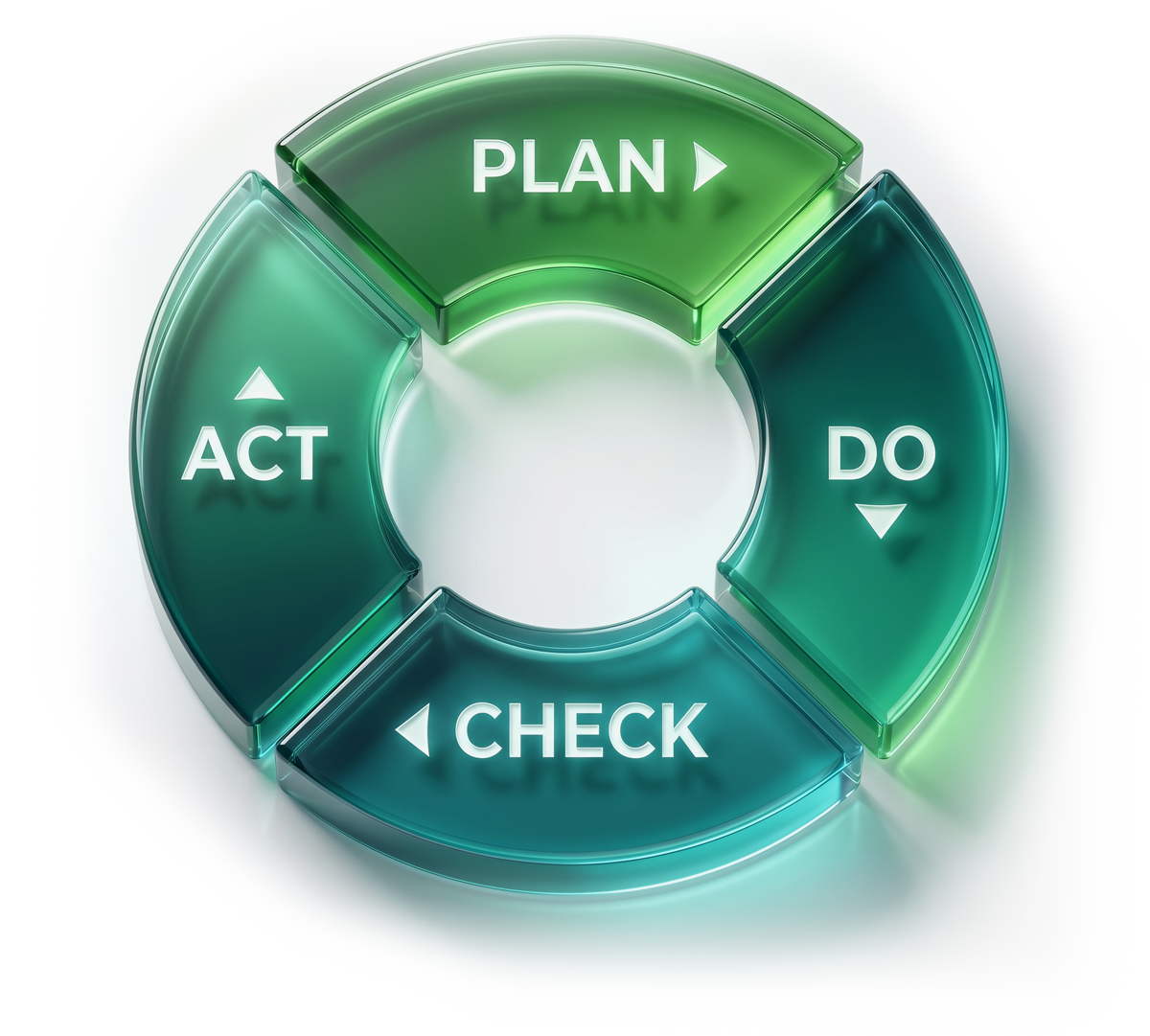
By establishing annual environmental and energy objectives, evaluating the implementation of these objectives through management reviews, and working according to the PDCA cycle, we ensure that we continuously monitor and assess our activities and impacts along the entire value chain.
Our Core Topics

Substitution of Plastic

Improved Energy Efficiency

Use of Recyclate

Reduce Resource Consumption
Calculating the CO2 Footprint
There are various methods to demonstrate the environmental impact of products. One of these is the calculation of the product-related CO2 footprint, also known as the Product Carbon Footprint (PCF). The PCF of a product describes the total CO2 emissions generated during the product lifecycle and consists of Scope 1, 2, and 3.

Scope 1: Direct Emissions
Emissions from owned or controlled sources, e.g., the combustion of fossil fuels in company-owned facilities (boilers, furnaces).

Scope 2: Indirect Emissions from Energy Procurement
Emissions from purchased energy, e.g., those generated during the production of purchased electricity.

Scope 3: Indirect Emissions from the Value Chain
Upstream and downstream emissions not directly controlled by the company, e.g., raw material procurement or supplier activities.
PCF Shows Emissions:
Example Snap-Off Blade from LUTZ BLADES
By calculating the PCF, it is possible to classify products and their associated emissions into categories, making them comparable.
Example Calculation: The Snap-Off Blade-2011 from LUTZ BLADES
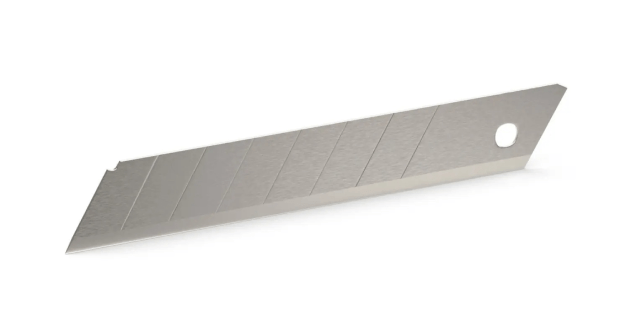
The Snap-Off Blade-2011 from LUTZ BLADES is made of stainless steel or carbon steel. It is used for cutting carpets and films as well as for stripping cables and features snap-off
segments.
The calculation basis consisted of 150 carbon steel blades. With a length of 100.00 mm, a width of 17.70 mm, and a thickness of 0.5 mm, they have a material weight of 1 kg.
For the PCF calculation, the emissions from Scope 1 and 2 as well as the proportional emissions from Scope 3, where known, were used.
The volume-weighted average PCF of this blade is 4.62 kg CO₂ per kilogram.
What We Have Already Achieved
We have firmly integrated the international standard ISO 14001 into our company processes, thereby establishing the foundation for systematic management of our environmentally relevant topics. During implementation, we collected comprehensive data on energy and resource consumption as well as emissions. This data forms the basis for clearly defined objectives and enables transparent measurement of our progress.
The results achieved are already visible: We have increased the recycling rate for waste by 18%, introduced recycled paper company-wide, and optimized energy consumption in areas such as building management systems, compressed air generation, and lighting. In our own injection molding facility, we manufacture packaging for our blades that is up to 100% recyclable and contains up to 49% recyclate; additionally, we recycle plastics directly in an internal loop.
In 2025, we internally published our first sustainability report based on the Voluntary Sustainable Reporting Standard (VSME) to transparently present our measures and objectives. Our responsibility also includes managing our supply chain. Therefore, we have established both a Code of Conduct for suppliers and an internal code of conduct.